Pharmaceutical Storage Tank
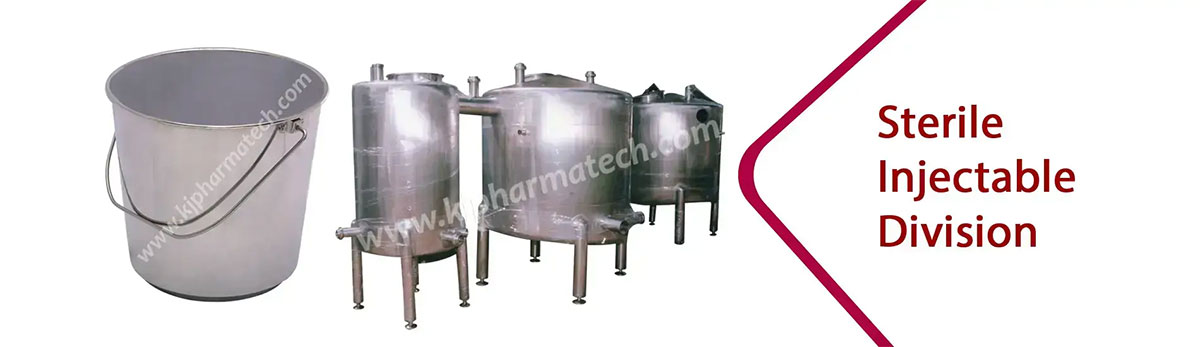
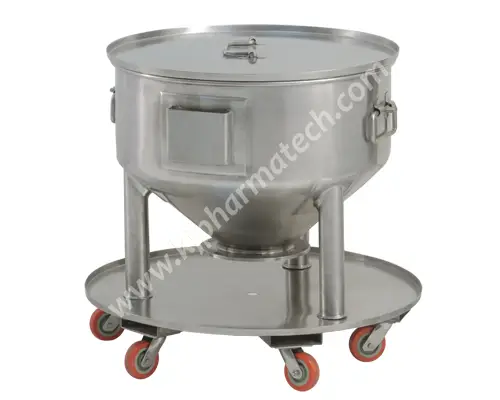
A reputable Manufacturer of Pharmaceutical Storage Tanks, KJ PHARMATECH (Projects) Pvt. Ltd. provides stainless steel tanks of premium quality made for the safe and hygienic storage of pharmaceutical liquids, formulations, and intermediates. Premium-grade stainless steel (SS 304/316) is used to make our pharmaceutical storage tanks, hence guaranteeing great corrosion resistance, strength, and lifespan. These tanks are made to preserve product purity and stop contamination throughout storage and transfer activities. Our tanks fit perfectly in sterilised settings where hygiene and quality are paramount because they have a smooth, mirror-polished finish and GMP-compliant design.
Every pharmaceutical stainless steel storage tank is created to fulfill exacting industry criteria and client-specific demands. KJ PHARMATECH (Projects) Pvt. Ltd. provides a broad selection of vertical, horizontal, jacketed, and insulated configurations. Enhanced functionality can be achieved by integrating optional features like CIP (Clean-in-Place) systems, manholes, agitators, and sampling valves. Our pharmaceutical offers simple to clean and maintainability. In difficult production settings, storage tanks guarantee dependable performance, product safety, and extended service life.
Benefits of Pharmaceutical Storage Tank
A pharmaceutical storage tank is specially designed equipment used to store liquids, chemicals, and formulations safely in pharmaceutical manufacturing units while maintaining hygiene, temperature control, and product integrity.
- Hygienic storage: Made with sanitary materials like stainless steel to prevent contamination.
- Safe preservation: Maintains the quality and stability of pharmaceutical liquids and solutions.
- Temperature control compatibility: Can be designed with heating or cooling systems for sensitive products.
Features of Pharmaceutical Storage Tank
- Manufactured from premium-grade stainless steel for maximum durability and hygiene.
- Designed in accordance with GMP, FDA, and pharmaceutical industry standards.
- Corrosion-resistant and rust-proof construction for long service life.
- Precision-engineered for accurate, reliable, and efficient operation.
- Smooth, seamless surfaces for easy cleaning and contamination control.
- Energy-efficient design with low maintenance requirements.
- Suitable for continuous and high-volume pharmaceutical production.
- Available in standard and customized configurations.
- User-friendly operation with advanced safety features.
- Ensures consistent product quality and regulatory compliance.
Application of Pharmaceutical Storage Tank
- Tablet manufacturing and compression
- Capsule filling and processing
- Liquid oral medicine production
- Injectable pharmaceutical manufacturing
- Powder and granule processing
- API (Active Pharmaceutical Ingredient) manufacturing
- Pharmaceutical packaging and labeling
- Biotechnology and life science industries
- Research and development laboratories
- Nutraceutical and healthcare product manufacturing
Products